Connectors
Nobody wants to explain their jobto a computer every morning
The useful agent understands the shape of your work without making you describe it every day.

By Waldo team
Product and connectors
Listen
Loading audio · System voice
On this page
There is a specific kind of insult that fitness software has perfected.
It is early. You are a nurse, you have just finished a long night shift, and you have been on your feet since yesterday. Your watch buzzes to say you should push harder today because your readiness is looking good.
Push harder. Sure. Let me find some more hours.
The software is not being cruel. It is being ignorant, and from the receiving end those can feel identical. It has your heart rate. It has no idea what your life looks like, and it has never occurred to it to find out.
The tax nobody mentions#
The workaround is that you tell it. Every tool that wants to be useful about your day starts by asking you to describe your day.
So you fill in the onboarding. You pick your goals and enter your schedule, wake time, work hours, and training days. A pile of forms later, you have taught it a version of your life that was accurate on the day you typed it and began decaying immediately. The project shifts. The rota changes. A client moves the deadline. You are not going back into settings to keep a form informed.
The tools that ask less just guess more, which is worse. The tools that ask more get abandoned during setup.
Either way you are doing the work. You became the integration layer. You are sitting between the thing that knows your body and the thing that knows your calendar, manually carrying information between them with your own hands, which is a strange job for a person to have now.
Two hours is not two hours#
Here is the thing every scheduling tool gets wrong, and it is not a small wrong.
Your calendar treats time as fungible. An empty hour is an empty hour. It will happily let you book strategic planning late on a Thursday after meeting after meeting, because the slot is white space on a grid and white space is available.
But you know that hour is worthless. You have known it for years. You have never once done good thinking late on a heavy Thursday. You do your best work in a window that is roughly the same every week, and outside it you are a person moving text around.
Nobody's software knows this. Your calendar knows when you are free. Your wearable knows when you are sharp. These two facts live in different apps that have never spoken, and the entire value is in the overlap.
That overlap is the product. Not "reads your health data." Not "manages your calendar." The specific act of putting the hard thing in the hour when your nervous system can actually do the hard thing.
Connectors, which is a boring word for the important part#
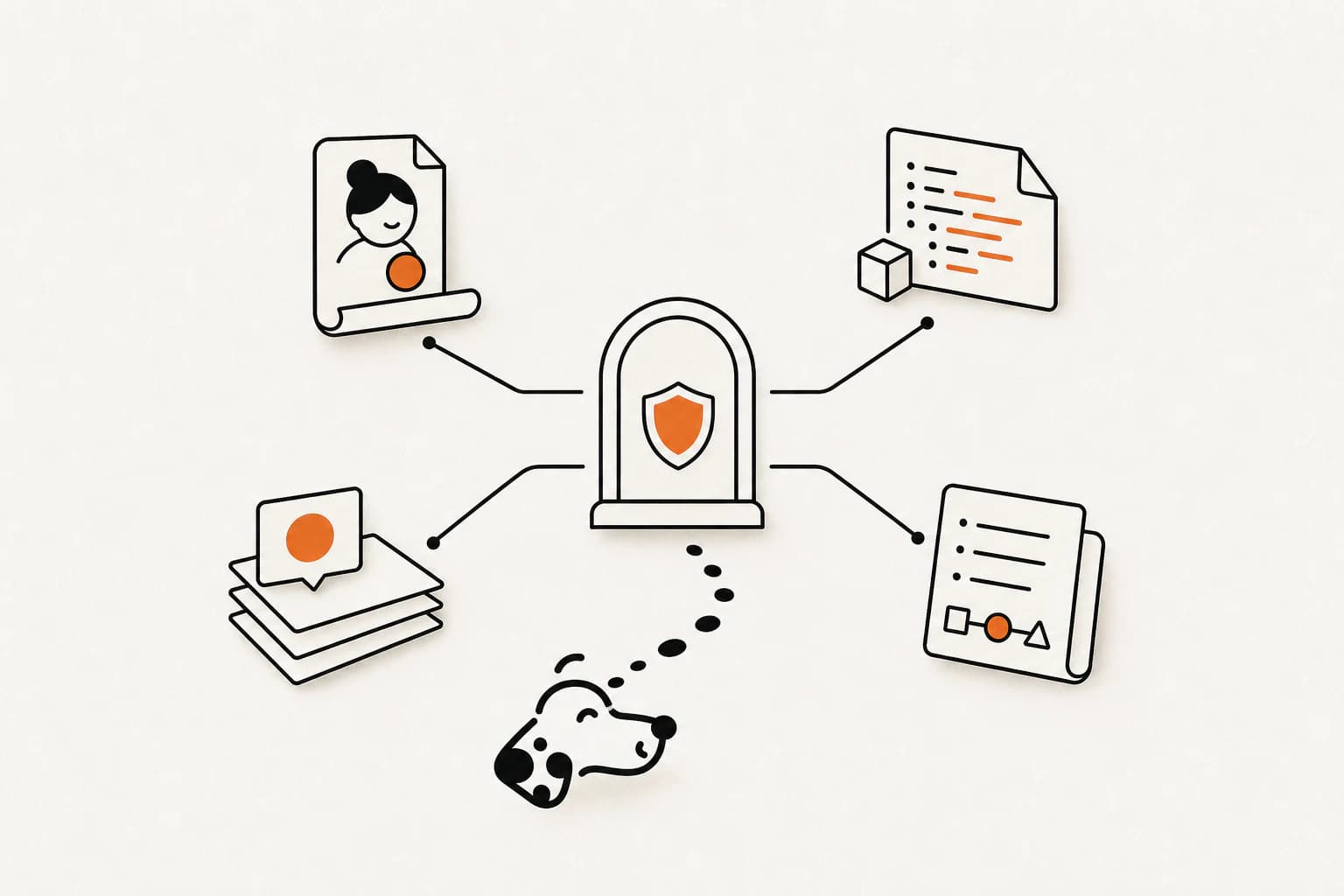
A connector is a permissioned connection to a tool you already use. Calendar, mail, GitHub, Linear, Drive. It can read the context you approve and, when you allow it, carry out a specific action. You choose the access and can change it.
What it buys you is less explaining. Waldo does not need to ask what kind of week you are having when several deadlines land together. It does not need to ask whether a meeting is important when the calendar metadata already shows who is on it and where it came from.
The forms disappear. That is the pitch. There is no profile to maintain, because the profile is your actual working life, arriving live.
One thing worth being precise about, because it sounds worse than it is: communication connectors use metadata, not the contents of your private messages. Waldo works from the shape of your day. A long meeting coincided with an elevated signal. A burst of email activity continued after work. The shape is where the useful context is, and it costs you far less to hand over.
Different jobs, different shapes#
Once the day is legible, the job type stops being a survey answer and starts being obvious from the data. Different work has different hours that matter, and the useful move is different for each.
An engineer needs their sharp block defended. Not every hour thinks the same, and the part of the morning where yours does should belong to the hard problem, not the standup. So the standup moves, the PR reviews get batched into the low hours where batching is fine, and the sharp block stays clear.
A founder needs the noise gone before they arrive. A short night, then an important call first thing. Move what can move. Surface the threads that actually matter. Hold the deck window. By the time they open the laptop there are fewer decisions waiting.
A product lead needs the context assembled, not just the time booked. The spec block is worth nothing if its opening stretch goes to finding the ticket and the notes from the last review. So the block is held and the context is already attached to it.
Same system underneath. The difference is which hour it protects and what it puts in front of you when you get there.
The executive view, which is a pompous name for a short list#
What you actually want in the morning is not another screen. It is the answer to one question: what is mine to deal with today?
Not everything that happened. Not a wall of notification badges. The few things that will matter by tonight, in the order your capacity can take them, with the context attached and the rest held back.
That is the shape of The Brief. Here is what your body prepared for. Here is what got moved and why. Here are the threads worth your attention. Everything else is handled or waiting.
Then it goes quiet, which is most of the job.
Where we are honest about this#
Connectors are shipping in stages. Calendar and mail first, then the work tools, then the long tail, and the profession-specific behaviour gets sharper the longer it watches you rather than arriving fully formed on day one.
And it will get things wrong. It will protect a block you did not want protected, or move something you needed where it was. Every action Waldo takes shows its reason and keeps the undo one tap away, and the corrections feed back in, because a system that acts on your behalf and cannot be corrected is not something anyone should install.
But it will not tell a nurse coming off nights to push harder. It can see the shift.
Sources and basis
Waldo team
The team making Waldo useful across the tools and working rhythms people already have.